
Sprint visibility is something every tech lead wants, but few want to ask for too aggressively. It can impact how teams communicate and work together.
Ask too little, and you’re caught off guard by missed deadlines, hidden blockers, or work that quietly slips out of scope. Ask too much, and you risk becoming the lead who constantly checks in, comments on every ticket, and slowly erodes trust. And for technical teams, autonomy is as important as alignment. Both suffers without visibility.
The key point is simple: visibility and micromanagement are not the same thing. In fact, micromanagement often shows up because visibility is weak.
When progress isn’t clear, leaders fill the gaps by asking more questions. This article focuses on how to fix the gaps instead so visibility improves without adding pressure or noise.

Why Sprint Visibility Breaks Down in the First Place
Technical teams are handling multiple projects and collaborating with other teams. Priorities tend to shift fast. Bugs will show up and communication can get chaotic. Visibility is essential when it comes to keeping workflows seamless and collaboration smoother.
However, visibility can drop due to a number of reasons. Before fixing visibility, it’s worth being honest about why it’s usually bad.
1. Status lives in people’s heads
Work gets discussed in Slack threads, quick calls, or side conversations. None of it makes it into the system. From the outside, everything looks on track until it’s suddenly not.
2. Updates are manual and optional
When progress depends on someone remembering to update a ticket, it will always be outdated. Humans are busy. Updating tools is rarely top priority.
3. Too many tools, no single source of truth
Jira says one thing. GitHub says another. Slack says something else entirely. Tech leads end up stitching together context from five places. Using lots of tools does not only cause confusion, but also increases cognitive load.
Read More: Reducing Cognitive Load in Dev Teams Through Connected Tooling
4. Leads compensate by checking in more
When signals are weak, leaders lean on direct questions:
- “Is this done yet?”
- “What’s blocking you?”
- “Can you send an update?”
That’s how micromanagement starts. Not from control issues, but from missing information.

Visibility Is Not Surveillance
One of the biggest misconceptions in sprint management is the idea that more visibility requires more oversight. In practice, the opposite is usually true. When visibility is weak, leaders compensate by asking more questions. When visibility is strong, those questions answer themselves.
Good visibility reduces interruptions. It gives tech leads the information they need without pulling developers out of flow or asking for constant updates.
Micromanagement, on the other hand, forces people to repeatedly explain where they are, what they’re doing, and when they’ll be done, often to fill gaps the system should already cover.
It’s important to be clear about the goal. Visibility is not about tracking effort or monitoring behavior. It’s not about knowing who’s typing, who’s online, or how many hours someone worked. That kind of surveillance creates anxiety and defensive behavior, not better outcomes.
The real goal is much simpler: to make sprint health obvious at a glance.
That means being able to see:
- What’s moving
- What’s stuck
- What’s at risk
- What’s done
When these signals are clear, tech leads don’t need to interrupt the team to understand what’s happening. They can spot issues early, decide where to help, and stay out of the way when things are running smoothly.
If you still need constant check-ins to understand sprint progress, the issue isn’t discipline or accountability. It’s a system that fails to surface the right signals. Fix the system, and the pressure to micromanage disappears on its own.
Read More: The Dynamics of Dev Team Collaboration: Autonomy and Alignment
Practical Rules of Sprint Visibility That Actually Work
Improving sprint visibility doesn’t require more meetings, more tools, or more oversight. It requires a few clear principles that make progress visible by default and reduce the need for constant check-ins.
The rules below focus on making work speak for itself so teams stay autonomous and leads stay informed.
Design for Pull Visibility, Not Push Updates
If sprint visibility depends on people pushing updates, it will always be incomplete. Instead, the system should pull signals directly from work as it happens. When progress updates itself, visibility becomes reliable and low-effort.
In practice, this means:
- Pull requests updating task status
- Commits linked directly to sprint items
- Reviews and merges reflecting real progress
When work creates the signal, leads don’t need to chase updates. Task management tools helps dev teams reduce the manual work of updating their tasks and notifying the rest of the team. These tools are more dynamic.
Make Work-in-Progress Impossible to Ignore
Invisible work-in-progress is one of the biggest threats to sprint predictability. Tasks get started, partially worked on, then quietly deprioritized. From the board, everything still looks fine, but progress has stalled underneath.
Better visibility comes from making work in progress obvious:
- Limit how many items can be “In Progress”
- Use clear, explicit workflow states
- Highlight tasks that sit too long without movement
This isn’t about pressure. It’s about clarity. A stuck item should stand out on its own and priorities should be clear.
Read More: Top Tips for Prioritizing Your Workload and Boosting Productivity
Replace Status Meetings With Status Signals
Many sprint meetings exist for one reason: to answer, “Where are we right now?” When tools don’t answer that clearly, meetings fill the gap. When visibility improves, many of those meetings become unnecessary.
Effective status signals include:
- Dashboards showing sprint progress against scope
- Aging indicators for stalled tasks
- Automated alerts when expectations aren’t met
Meetings should be for decisions and alignment, not for reading updates aloud.
Measure Flow, Not Just Completion
Burn-down charts show what’s finished. They don’t show how work is moving. To understand sprint health early, tech leads need flow signals such as:
- Cycle time from start to completion
- Time spent blocked
- Review time versus active development time
These metrics surface problems before deadlines slip, and they highlight process issues rather than individual performance.
Make Blockers Visible and Easy to Share
If reporting a blocker feels risky or embarrassing, people won’t do it.
Blockers should be simple to mark, visible to everyone, and treated as system issues. Not personal failures. When blockers are easy to surface, tech leads can focus on unblocking instead of interrogating.
Stop Using “Are You Done?” as a Signal
Repeatedly asking “Is this done yet?” is a symptom of poor visibility. It usually means that you can't see progress until task owners tell you. This does not only take up a lot of time for dev leadership, but this also increases context switching for the team.
Replace that question with clearer systems:
- Well-defined acceptance criteria
- Shared definitions of “done”
- Tool-based signals that reflect actual completion
When “done” is clear, trust improves automatically.
Make Visibility Shared, Not Top-Down
Sprint visibility shouldn’t flow only upward. Everyone on the team can make confident decisions and start tasks when they see clearly who owns what. Work should also be tied to sprint goals.
When developers can see:
- How their work ties to sprint goals
- What others are working on
- The overall state of the sprint
They self-correct earlier, collaborate sooner, and flag risks without being prompted. Strong visibility reduces the need for leadership intervention.
Read More: How a Clear Project Roadmap Improves Alignment, Speed, and Results
Why More Status Updates Don’t Mean Better Visibility
When sprint visibility breaks down, teams rarely do nothing—they add more. More reports, more fields, more check-ins. On the surface, these practices look like discipline and transparency.
In reality, they often create noise, outdated information, and false confidence. These anti-patterns usually emerge with good intentions.
Leaders want clarity, teams want to appear responsive, and systems get layered on to fix the problem. But instead of improving visibility, they shift effort away from real work and toward maintaining the illusion of progress.
If your sprint relies on any of the following, visibility isn’t actually improving. It’s being propped up.
Avoid relying on:
- Daily written status reports that go stale instantly
- Overly detailed tickets that no one updates
- Manual progress percentages like “80% done”
- Private DM check-ins that fragment information
These don’t improve visibility. They compensate for its absence.
What Good Sprint Visibility Feels Like
True sprint visibility isn’t loud or heavy. It doesn’t require constant reminders, long meetings, or repeated questions. Instead, it creates a quiet confidence that the sprint is moving in the right direction. Even when the work is complex or pressure is high.
When visibility is working, progress is easy to understand without effort. Risks surface early, decisions happen faster, and trust replaces tension. Teams spend less time explaining what’s happening and more time actually moving work forward.
When visibility works well:
- Tech leads stop chasing updates
- Standups get shorter and sharper
- Blockers surface earlier
- Teams feel trusted, not watched
- Sprints feel calmer, even under pressure
That’s the real goal. Not control. Not oversight. Just confidence.
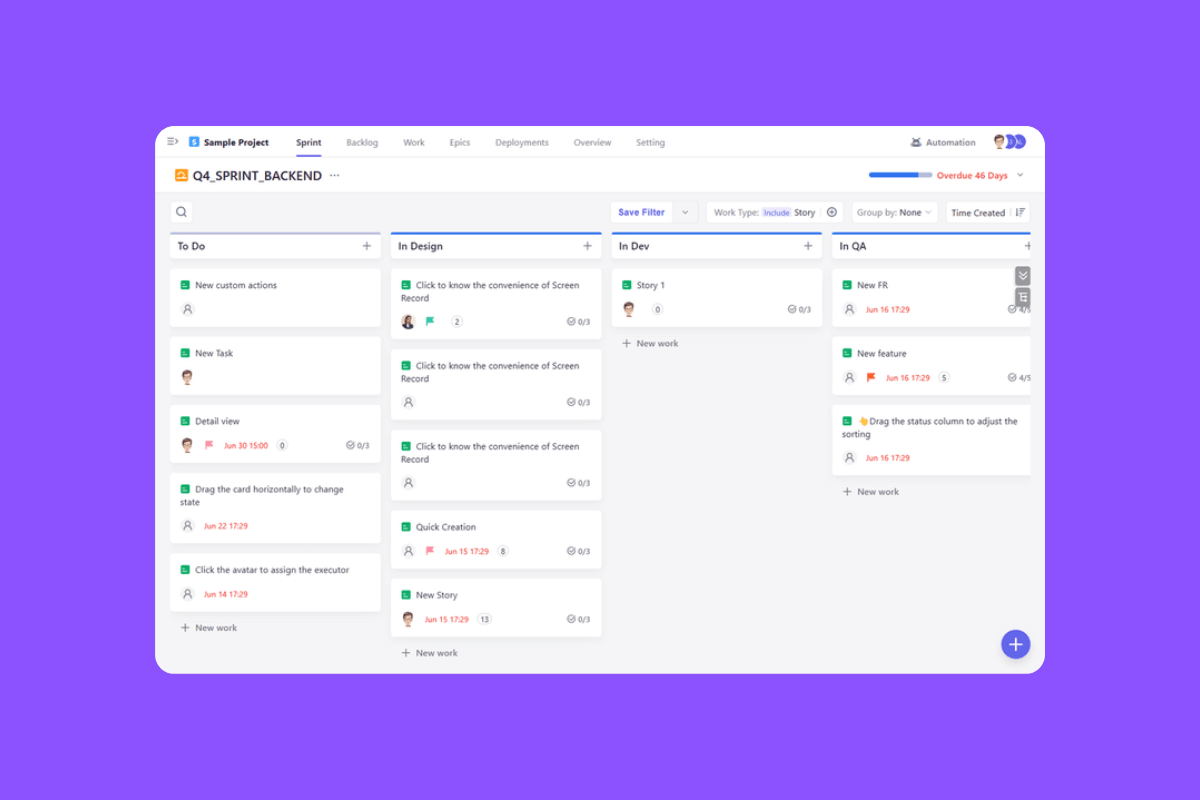
How Leiga Helps Improve Sprint Visibility (Without Micromanaging)
Leiga is built around a simple idea: visibility should come from the work itself, not from constant check-ins. Here’s how it helps tech leads get clarity without hovering.
1. Real-Time Progress, Not Manual Updates
Leiga connects work across tools and reflects progress automatically. When tasks move, code is reviewed, or dependencies change, visibility updates without someone having to remember to log it.
2. Clear Sprint Health at a Glance
Instead of digging through tickets, chats, and dashboards, Leiga gives tech leads a clear view of:
- What’s on track
- What’s slowing down
- What needs attention now
No status meetings required.
3. Early Signals for Risk and Blockers
Leiga surfaces stalled work and emerging risks early so leads can unblock teams before problems escalate, not after deadlines slip.
4. Shared Visibility for the Whole Team
Sprint visibility isn’t just for leads. Leiga makes progress and priorities visible to everyone, helping teams self-align and reduce unnecessary back-and-forth.
5. Less Chasing, More Leading
By removing the need for constant updates, Leiga gives tech leads time back to coach, plan, and improve systems instead of chasing status.
The result is better sprint visibility, less noise, and zero micromanagement. Teams spend less time explaining progress and more time delivering real work, while tech leads gain clarity without hovering and developers maintain their autonomy. Sprints become calmer, more predictable, and easier to run.
Read More: 8 Essential Skills for Successful Macro Management
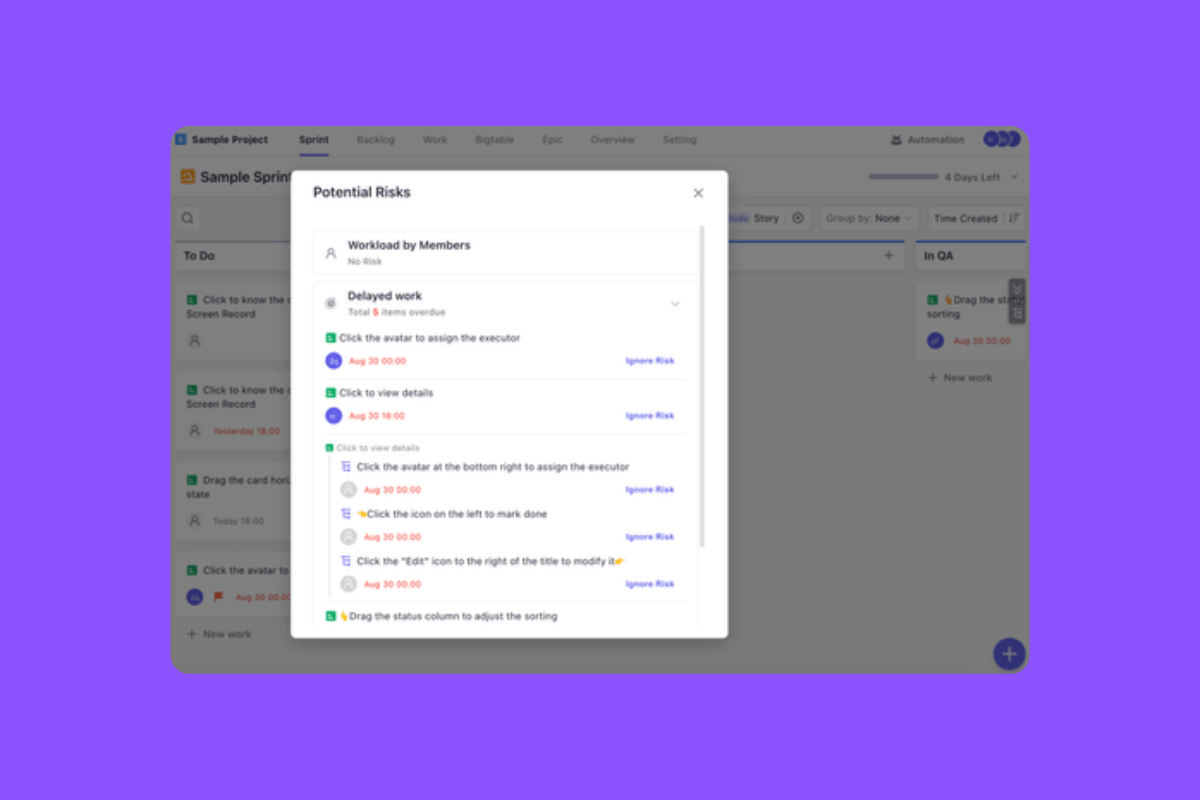
Designing Visibility Into the Way Teams Work
Sprint visibility works best when it’s built into the way work flows, not layered on top with extra meetings, reports, or check-ins. When progress is visible by default, tech leads don’t need to chase updates or second-guess what’s happening. They can focus on unblocking teams, making better decisions, and keeping delivery predictable.
This is where tools like Leiga make a real difference. By turning day-to-day work into clear, real-time signals, Leiga helps teams surface progress, risks, and blockers without manual effort or constant interruptions.
Visibility comes from the work itself, not from asking people to explain it. The result is a calmer sprint rhythm. Teams stay autonomous, tech leads stay informed, and micromanagement fades away because it’s no longer necessary.
When visibility is designed this way, everyone spends less time reporting on work and more time actually moving it forward. Experience better visibility with Leiga. Try it for free today.
- Streamline Your Workflow with Leiga
- Effortlessly automate tasks
- Boost productivity with AI insights
- Free forever — elevate project management
